
| U.S. tariffs on Brazilian auto parts have a direct impact on exports |
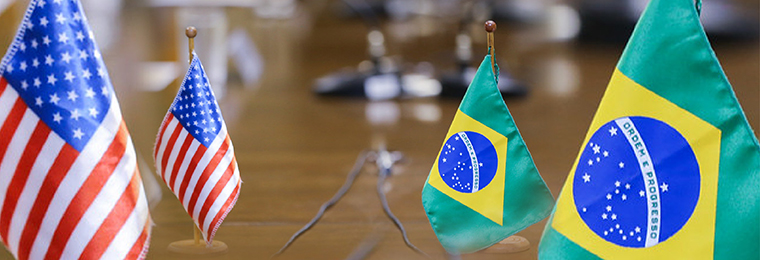 |
Brazilian manufacturers that export auto parts to the United States are facing a new scenario after the application of surcharges imposed by the Donald Trump administration since August 6, 2025. The US is the second main destination for Brazilian auto parts, with shipments amounting to US 1.37 billion in 2024, which accounted for 17.5% of the total exports by this industry. Both OEMs and the aftermarket were affected by such measure, as all imports are subject to additional tariffs, depending on product category. The surcharges applied to auto parts follow different categories, according to official US government documents: Proclamation 10908 (Section 232: Trade Expansion Act), which establishes a 25% surcharge on auto parts for passenger vehicles and light commercial vehicles with a maximum Gross Vehicle Weight (GVW) of up to 5 metric tons; Proclamations 10895 and 10896 (for steel, aluminum, and their respective derivative articles), updated on August 19, 2025, which listed 407 new items that will be subject to the 50% surcharge applicable to steel or aluminum content from abroad (there is no surcharge if steel or aluminum from the US is used); and Executive Order 14323 (IEEPA), which imposes a 50% surcharge on Brazilian auto parts not covered by the previous standards. Thus, the effects of the tariffs depend on how the auto parts are used; US-based importing companies must conform to the specific rules of each category. Despite the tariffs, the Brazilian auto parts industry remains robust and reliable, and can supply the demand of other international customers. "Brazil has trade agreements that provide access to strategic markets, especially Latin American countries, which favors exports of auto parts. In addition, there are ongoing negotiations with the European Union, EFTA (Switzerland, Norway, Iceland, and Liechtenstein), and Canada," says Rejane Darold, Foreign Trade Advisor of the Brazilian Association of the Auto Parts Industry (Abipeças) and the National Association of Brazilian Auto Parts Manufacturers (Sindipeças). “These agreements reinforce the idea that the Brazilian industry appreciates good bilateral trade relations, offers high-quality products, and develops strong partnerships even in the face of the higher tariffs applied by the United States,” says Darold. Additionally, the Brazilian government adopted a proactive attitude. On August 29, it authorized consultations and measures based on the Economic Reciprocity Act, assessing possible responses to the tariffs imposed by the United States. The government also announced a set of measures to protect the Brazilian economy. In parallel, the Ministry of Development, Industry, Trade, and Services (MDIC) has been undertaking initiatives together with representatives from various productive sectors, such as the National Confederation of Industry (CNI), to negotiate with the US, protect Brazil by legal means, and receive stronger support from multilateral institutions, such as the World Trade Organization (WTO). Sindipeças is very committed to searching for alternatives for its associates. Its priority is to advance diplomatic solutions that preserve the interests of the Brazilian auto parts industry without compromising long-term business relations. Sources: SECEX/MDIC, Abipeças/Sindipeças, White House, Bureau of Industry and Security (Department of Commerce), Executive Order 14323, International Emergency Economic Powers Act (IEEPA), and gov.br. |
| Brasil Auto Parts has increased participation in rising markets this semester |
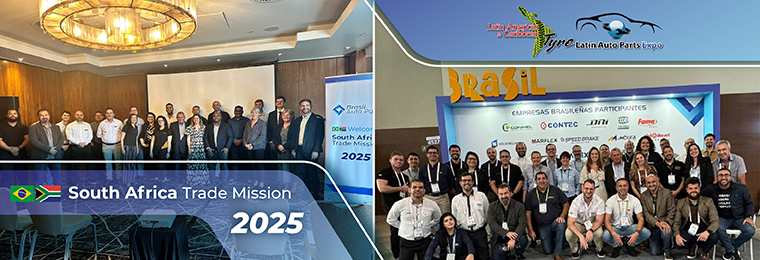 |
Between July 9 and 11, 2025, the Panama Convention Center hosted the Latin Auto Parts Expo, an event of great relevance for the auto parts industry in Latin America. The Brazilian pavilion was organized by BAP, a project developed in partnership between Sindipeças and the Brazilian Trade and Investment Promotion Agency (ApexBrasil). The exhibiting companies Conimel, Contec, DPF, DNI, Fama, KSPG, M.R., Moura, Notria, Platodiesel, Pradolux, Quinelato, Radiex, Rainha das Sete, Suporte Rei, SYL, Track, UFI, and Viemar made 436 business contacts, with 389 being new ones. For Conimel’s sales director, Flavia Neves Becker, the company’s first participation in the trade show demonstrated the company’s potential for integration with new markets. “The event was very well organized and was especially important because of the contacts that we made. 100% of visitors were interested in high-quality products, like the ones we developed, and they said it is not easy to find them in the market. Another point that caught our eye was the opportunity to share experiences, create strategic connections, and open doors to important partnerships. We are convinced that the results will be very promising, and we confirm our intention to participate in other events held by Brasil Auto Parts”, says Becker. Mauricio José Moraes, export manager at Platodiesel, endorses Becker’s opinion, and says that his company’s second participation in Latin Auto Parts Expo produced excellent results. “In the 2024 edition of the trade show, we had the opportunity to win back an old customer who had stopped buying from us, and we got a new one. They are both strong and have potential to advance in the regional market. In 2025, we took a step further: we strengthened and increased our business deals with these partners, offered training opportunities, and made technical visits. Thanks to the event, which grew bigger and is more diverse now, we also consolidated our relations with other Central American markets, such as Costa Rica, Ecuador, and El Salvador”, says Moraes. With its Canal, the Colón Free Trade Zone, and an efficient airport infrastructure, Panama has been gaining momentum as a logistics hub capable of dispatching goods across the Americas and the Caribbean. According to Trading Economics, at a regional level, Central America’s auto parts market earned a revenue of USD 1.25 billion in imports in 2024, with Panama being the second largest buyer. Brazil emerges as a relevant supplier of auto parts to Panama, and is likely to increase its share of business. After the trade show in Panama, a group of Brazilian companies went on a trade mission to South Africa between September 15 and 19, 2025. Their representatives attended seminars on business environments, participated in B2B rounds, and made technical visits to companies and distribution centers, gaining further insights into the local market. South Africa, the leader in the African automotive industry, houses a solid manufacturing base that generates more than 80,000 direct jobs in the segment of components, integrated into a larger chain that encompasses retail, services, and logistics. This mission offered Brazilian companies the opportunity to spot promising niches and establish distribution channels in that market, which combines significant expansion, maturity, and growing demand, especially for the aftermarket and electric vehicles. Sill in 2025, companies from the BAP project will be attending another four trade promotion events: a business round in São Paulo (October 13 to 17), and participation in three fairs in November, namely AAPEX Las Vegas (Nov. 4-6), in the United States; Agritechnica Hannover, Germany (Nov. 9-15), and Expotransport Guadalajara, in Mexico (Nov. 12-14). Keep track of BAP’s calendar! |
| Technology ensures authenticity check for auto parts |
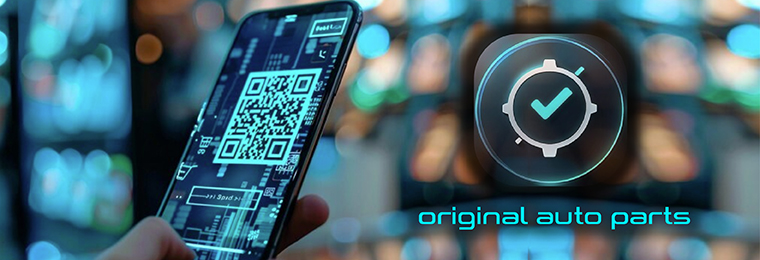 |
According to the Brazilian Association for Combating Counterfeiting (ABCF), Brazil manufacturers face losses due to counterfeit auto parts that amount to R$ 3 billion a year. Auto parts lead the ranking, only behind the cigarette sector, which loses R$ 7 billion a year, and the optical product market, with R$ 6 billion. To increase competitiveness and deal with malicious suppliers, the Brazilian auto parts industry has been preparing in several ways. One of them is the use of anti-counterfeiting resources, ranging from checks of the original color of packaging, in accordance with the standard of the brands, to tags like the security seal, which must be intact. KS, an active participant in the endeavors made by Brasil Auto Parts, is part of the German group Rheinmetall, one of the pioneers in the use of these labels. The company started a worldwide movement in 2016, when all its products began to rely on these devices. Talita Peres, the Marketing and Communications Manager for KS, explains that the measure has been very effective, because no product has been falsified in Brazil after the company started using this technology. “We use a system that creates a unique identity for each product, which can be verified by scanning a QR code. The tag allows you to check authenticity in no time. After scanning the code with your smartphone camera, it only takes a few seconds for the display to show a green light, indicating that the product is original, or a red light, which means counterfeiting. In addition to this system, you can use a microcode, which repeats the Security Code and can be scanned with a magnifying glass, and a tamper-proof holographic label, which contains a hologram with four digits of the full 2D array code”, says Peres. With this type of measure, the Brazilian auto parts industry can offer more security to customers, who can easily check for product authenticity. |
| Solid connections generate high-value businesses |
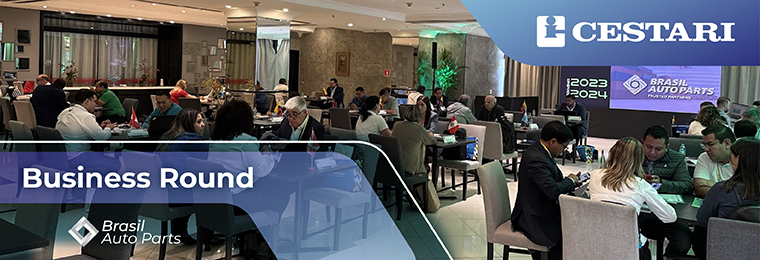 |
Cestari has consolidated its market share over more than four decades as an OEM and an aftermarket product manufacturer. The company is an expert producer of parts for suspension systems, front and rear axles, brakes, gearshifts, and engines for heavy and agricultural vehicles, and cemented its path to success by acquiring strategic brands. It acquired Metalauto, a leading manufacturer of bushings and non-ferrous alloys, in 2000; and CBL, a traditional company in the agricultural sector, in 2019. Today, Cestari showcases a portfolio with more than four thousand items to meet the demands of its Brazilian and international clients. The company’s experience across borders began in South America, which is still the main destination for exports, and later expanded to Europe and other regions. Currently, Cestari exports to more than 25 countries and international sales account for 20% of its revenues. “Our goal is to keep expanding, and one of our key advantages to achieve this goal is to bring to the foreign market the same know-how that we developed in Brazil, but adapting the products to the characteristics of the local fleets. In addition, we set up a department dedicated to exports and adopted strategies such as tax engineering and digital marketing, and we invested in communication in other languages, like English and Spanish,” says Celso Aloisio Cestari, the company’s Executive Director. Cestari’s objectives are to increase the company’s presence in Latin America, seek new markets such as Mexico, and expand its portfolio to other target countries. Cestari currently manufactures 90% of the products featured on its catalog, which ensures a flexible and reliable supply, and is a competitive advantage over other auto parts manufacturers. The strategy also includes the development of a catalog tailored for Europe. Another initiative to grow and consolidate in the international market is to participate in major trade shows such as Automec and Automechanika Frankfurt. “The events open doors to our company, help us find distributors and prospect customers, and increase our knowledge of other markets. Our five-year partnership with BAP has been invaluable along the way. The Brazil Pavilion brought together an average of 30 to 40 manufacturers, provided collective visibility, cut down costs, and strengthened the image of our industry”, the executive said. “In this way, Cestari entered the European market through a German distributor that it partnered with. Today, we are a regular supplier under a private label system, that is, we manufacture the product which is sold under the client’s own brand. A similar situation happened to Guatemala, which served as a gateway to Central America”, says Celso Aloisio Cestari. In the director’s opinion, signing this contract for supply to Germany was one of the most iconic milestones in the company’s internationalization journey. “We learned a lot from this whole process, and to contribute to the Brazilian auto parts industry, we thought of bringing this client to the business rounds in Brazil this October. Our intention is to help other manufacturers participating in the Brasil Auto Parts project to have the same opportunity.” Cestari’s international trajectory is marked by stories that highlight the value of connections. “Someone from abroad will only bet on you after you have earned their trust” says Celso Aloisio Cestari. And this is only an example of how the Brazilian auto parts industry has focused on innovation and sustainability, combining productive capacity, technical expertise, and management strategies to offer complete solutions to customers. To learn more about what we have to offer, please visit our website. |
| Brazil will be a first-time host to COP 30 |
The auto parts industry, aligned with all proposals for sustainable mobility, will have a prominent representative at the conference: Dan Ioschpe, the Climate High-Level Champion. In addition to being a businessman, he is the Vice President of The Federation of Industries of the State of São Paulo (FIESP), and a Member of the Board of Directors of the National Association of Brazilian Auto Parts Manufacturers (Abipeças/Sindipeças). Source: Agência GovBr. |
In order to achieve its goals, ApexBrasil carries out several trade promotion initiatives aimed at promoting Brazilian products and services abroad, such as prospective and trade missions, business rounds, support to the participation of Brazilian companies in major international fairs, visits of foreign buyers and opinion makers to learn about the Brazilian productive structure, among other business platforms that also aim at strengthening the Brazil brand. |



| To ensure that our communications reach your inbox, add the email address [email protected] to your address book. Follow Brasil Auto Parts on Facebook and Linkedin. |